CASE STUDY
Building Curriculum on Emerging Health Challenges
Educational resources to prepare the future health workforce for the challenges ahead
ROLE
- Curriculum Strategy
- Stakeholder Management
- Project Coordination
CONTEXT
Digital learning platform for undergraduate medical education
ORGANIZATION
ScholarRx
Problem
Healthcare is evolving rapidly and health needs are increasingly complex, yet medical curricula often struggles to keep pace. Essential topics for future health professionals such as health equity, digital health, planetary health are not meaningfully integrated into existing curricula.
As a medical student, I advocated for these topics to become part of medical curriculum and led workshops that empowered other students to do the same. Joining ScholarRx allowed me to move from from advocacy to implementation – translating these emerging topics into structured learning experiences that could be adopted by medical schools worldwide.
Approach
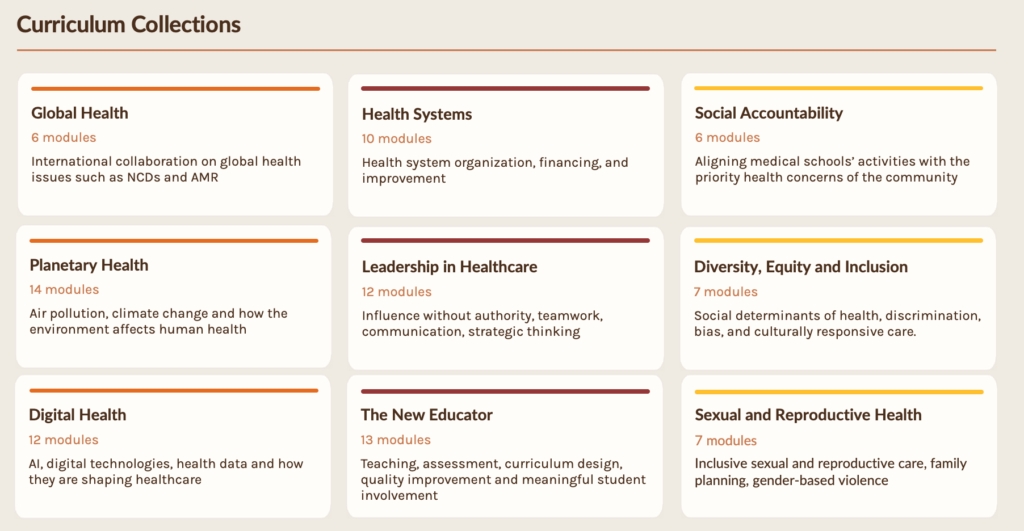
Over several years, I coordinated the development of 7 curriculum collections on emerging healthcare topics, bringing together clinicians, educators and student authors to create innovative, learner-centered educational resources.
- What needs to be taught?
Identify curriculum gaps and defined the scope of each collection.
- What should students learn?
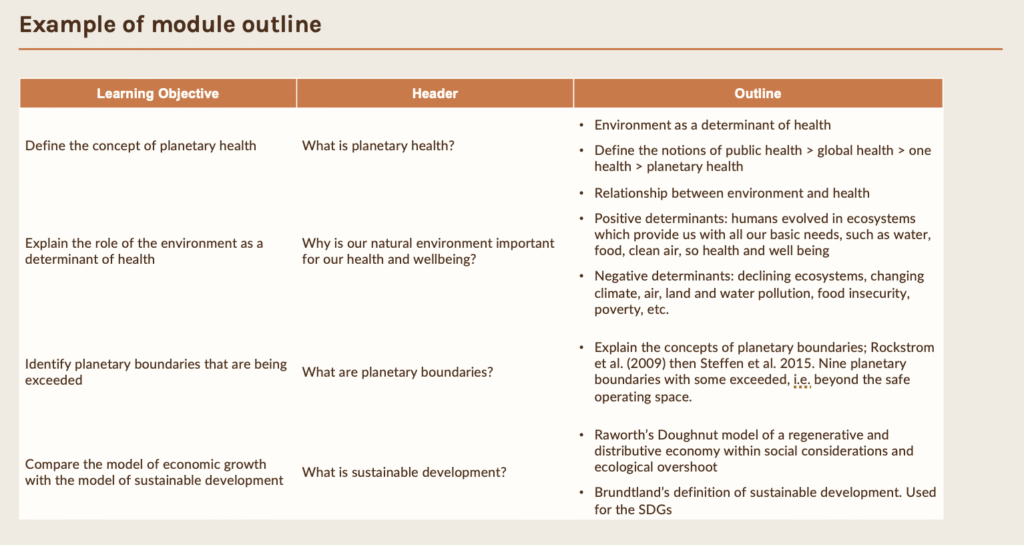
Work with subject matter experts to translate emerging topics into relevant learning objectives.
- Who needs to contribute?
Bring together students, clinicians, educators, and editors around shared educational goals.
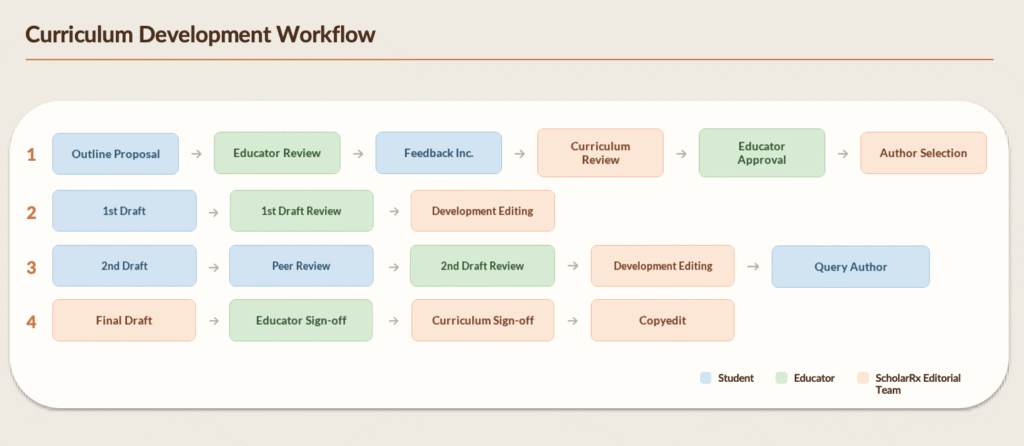
- How do we ensure quality?
Edit and coordinate iterative review cycles to improve structure, sequencing, scientific accuracy, and educational value.
- How do we deliver at scale?
Balance educational priorities with project timelines to publish high-quality curriculum collections on schedule.
In Practice
9
Curriculum Collections
87
Digital Learning Modules
100+
Contributors
30K+
Views
Related Publications
- A Student-Led Global Shared Medical Curriculum. Medical Science Educator (2021). doi:10.1007/s40670-021-01383-y
- Development of a suite of short planetary health learning resources by students for students as future health professionals. Frontiers Medicine (2024). doi:10.3389/fmed.2024.1439392
What I learned
Good curriculum defined as much by what it leaves out as by what it includes.
Every curriculum is an exercise in prioritization. Subject matter experts naturally approach topics from the perspective of their discipline, producing drafts that are comprehensive, technically accurate, and rich in detail. But healthcare students do not need to become specialists in every topic—they need to develop the knowledge, skills, and judgement required for practice.
Planetary health illustrates this well. Students benefit from understanding the science of climate change, but as future healthcare professionals, what matters most is recognising climate-related health risks, communicating with patients, preparing communities for extreme weather events, and responding to changing patterns of disease.
Curriculum design is ultimately about making deliberate educational choices that prepare learners for the realities of practice.
Explore more
Discover related projects across learning design, curriculum development, and product strategy.