CASE STUDY
Driving Cross-Functional Alignment in Product Development
Turning ambiguity into shared direction
ROLE
- Product Strategy
- Cross-functional collaboration
- Process design
CONTEXT
Product development for a digital learning platform
ORGANIZATION
ScholarRx
Problem
A new assessment authoring feature had reached a point where engineering, medical education, leadership, and customers were working from different assumptions. Each group held valuable perspectives, but there was no shared understanding of the problem, priorities, or success criteria. The challenge was no longer designing the feature itself, it was restoring alignment across disciplines so the team could make informed product decisions.
Approach
My role gradually evolved beyond curriculum support into designing the processes that supported cross-functional collaboration. This project marked a shift from supporting product development to designing the processes that enabled it.
01. Shared Governance
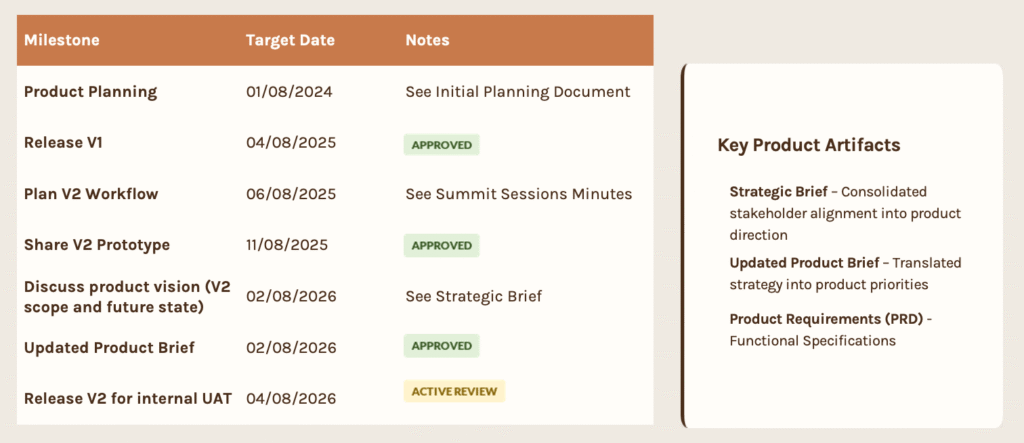
Created a shared governance system that centralized product documentation, milestones, requirements, and decisions into a single source of truth.
- Improved visibility across teams
- Reduced fragmented documentation
02. Product Definition
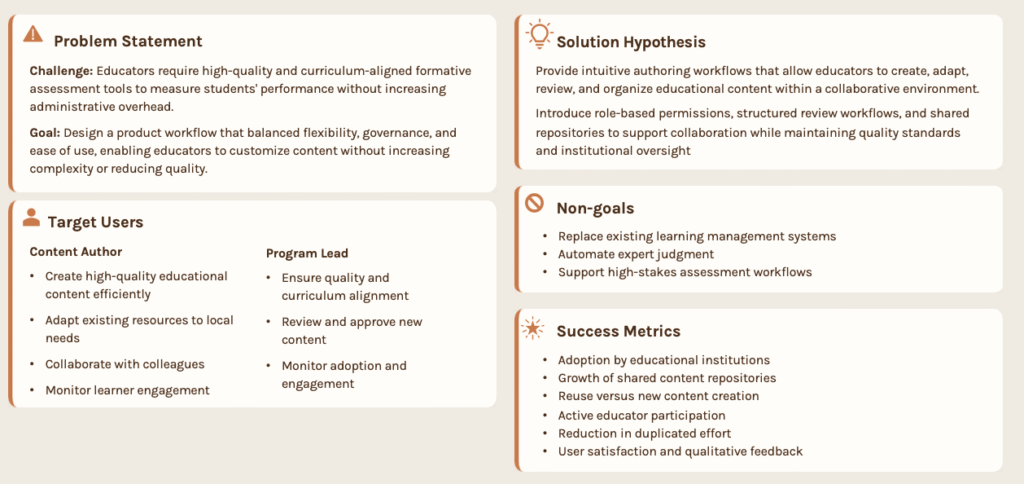
Translated stakeholder discussions into a structured product brief that defined the problem, solution, constraints, success criteria, and key metrics.
03. User Validation
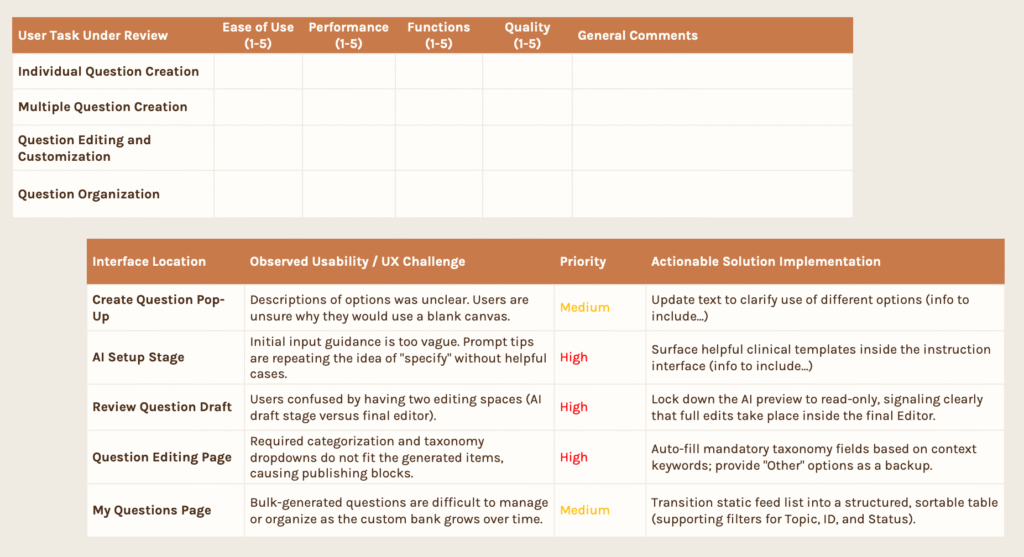
Synthesized User Acceptance Testing into prioritized engineering recommendations, translating user feedback into concrete product improvements before release.
04. Executive Decision Support
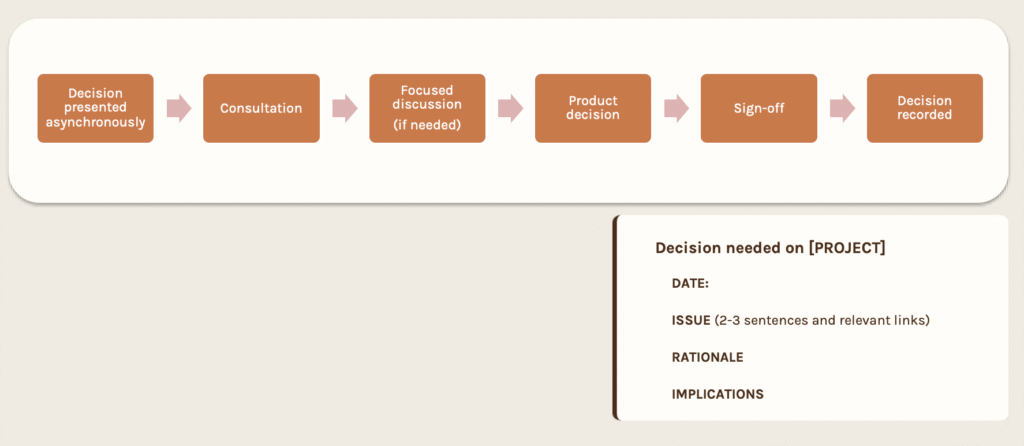
Designed reusable executive decision briefs that summarized options, recommendations, and next steps, enabling faster and more focused product decisions.
What I learned
Good teams don’t just need talented people. They need shared processes, documentation, and ways of working.
Some of the highest-impact contributions never appear in the final product. Clear documentation, shared decision-making frameworks, and explicit processes rarely receive much attention, yet they often determine whether multidisciplinary teams can collaborate effectively.
I first recognized this as a student leader, where frequent turnover meant that projects quickly lost momentum when knowledge lived only in people’s heads. Documentation wasn’t administrative work—it was how teams preserved progress and built on one another’s ideas.
Working in product reinforced the same lesson at a different scale. As organizations grow, relying on conversations and institutional memory becomes increasingly fragile. Creating a single source of truth, documenting decisions, and designing clear processes isn’t about bureaucracy. It’s about enabling better collaboration, preserving organizational knowledge, and making better decisions over time.
Explore more
Discover related projects across learning design, curriculum development, and product strategy.